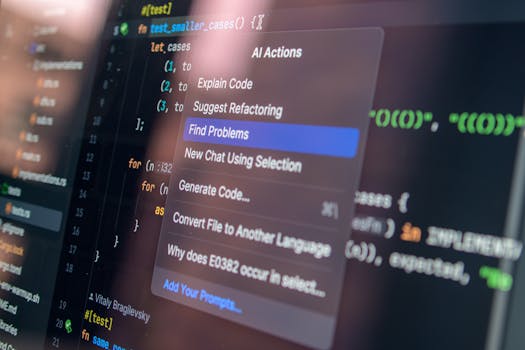
In today's fast-paced digital world, the gap between what users expect from software products and what is actually delivered can make or break a business. Quality Assurance (QA) solutions sit at the heart of this challenge, acting as the bridge between lofty expectations and the reality of complex software development. With users demanding flawless experiences and businesses striving to keep up with rapid release cycles, the role of QA is more critical—and more nuanced—than ever before. But what does it really mean to "bridge the gap" in QA, and how are modern solutions rising to this challenge?
The Expectations vs. Reality Divide in Software Quality
Software users—whether consumers or enterprise clients—have never been more discerning. According to a 2023 survey by Statista, 88% of app users abandon an app due to bugs or poor performance. In parallel, businesses often promise cutting-edge features, seamless performance, and rock-solid security.
However, reality frequently falls short. Some of the most common gaps include:
.png) - Feature completeness: Promised features may not be fully implemented or may work differently than advertised.
- Performance: Users expect lightning-fast load times, but slowdowns and crashes persist.
- Usability: Even minor glitches or unintuitive flows can frustrate users and erode trust.
- Security: High-profile breaches remind us that security flaws are often missed in the rush to release.
- Feature completeness: Promised features may not be fully implemented or may work differently than advertised.
- Performance: Users expect lightning-fast load times, but slowdowns and crashes persist.
- Usability: Even minor glitches or unintuitive flows can frustrate users and erode trust.
- Security: High-profile breaches remind us that security flaws are often missed in the rush to release.
This disconnect isn't just about missed expectations—it can translate directly into lost revenue, negative reviews, and lasting brand damage. Bridging this gap is where effective QA solutions come into play.
What Are QA Solutions? A Modern Overview
Gone are the days when QA meant a manual tester clicking through screens with a checklist. Today’s QA solutions are sophisticated, blending automation, artificial intelligence, and continuous integration to create robust, adaptive safety nets for software quality.
QA solutions encompass:
- Automated testing frameworks (e.g., Selenium, Cypress, Appium) - Continuous integration/continuous deployment (CI/CD) pipelines - AI-powered test generation and bug detection - Performance and security testing tools - User experience monitoring platformsA 2022 report by Capgemini found that 78% of organizations have increased their investment in automated QA tools over the previous three years, with automation now accounting for 50% or more of their testing activities.
Modern QA solutions are designed to address quality at every stage, from code commit to post-release monitoring, helping teams identify issues early and fix them before they impact users.
Why Gaps Happen: Challenges in Aligning Expectations and Delivery
Understanding why gaps arise is crucial for choosing the right QA strategy. Here are some root causes:
1. Communication breakdowns: Requirements can be misunderstood or change mid-development, leading to mismatches between what’s built and what’s needed. 2. Resource constraints: Tight deadlines and budgets may force teams to cut corners on testing or skip certain scenarios. 3. Complexity: With the rise of microservices, cloud deployments, and multiplatform apps, the test landscape has become exponentially more complex. 4. Human error: Manual testing is prone to oversight, especially under pressure.A 2021 World Quality Report revealed that 44% of teams admit to releasing software with known defects due to time pressures—a clear indication of the challenges in balancing speed and quality.
How QA Solutions Bridge the Gap: Key Strategies and Approaches
QA solutions don’t just find bugs; they enable teams to align software delivery with user expectations in several impactful ways:
1. Early and Continuous Testing By integrating testing from the start, issues are caught before they become costly defects. Automated unit and integration tests within CI/CD pipelines ensure every code change is validated quickly, reducing the risk of regression bugs. 2. Real-User Monitoring and Feedback Loops Modern QA includes tools that monitor real user interactions post-launch, capturing issues that escape pre-release testing. For example, platforms like New Relic or Datadog can alert teams to spikes in error rates or performance slowdowns in real time. 3. AI-Augmented Test Coverage AI-driven solutions can automatically generate test cases based on user flows, historical bug data, or code changes, dramatically improving coverage and catching edge cases that manual testers might miss. 4. Shift-Left and Shift-Right Testing The "shift-left" approach embeds QA earlier in development, while "shift-right" focuses on testing in production. Combining both ensures continuous alignment between what’s built and what users actually experience. 5. Cross-Platform and Compatibility Testing With users accessing software on a myriad of devices and browsers, automated compatibility testing tools (like BrowserStack or Sauce Labs) help ensure a consistent experience everywhere.Comparing Traditional vs. Modern QA Solutions
To better understand the evolution and impact of QA, let’s compare traditional and modern QA solutions across key criteria:
| Criterion | Traditional QA | Modern QA Solutions |
|---|---|---|
| Testing Approach | Manual, script-based | Automated, AI-driven, continuous |
| Speed | Slow, sequential | Fast, parallel, integrated in CI/CD |
| Coverage | Limited to main scenarios | Comprehensive, including edge cases |
| Scalability | Resource-bound, hard to scale | Highly scalable, cloud-based |
| Feedback Loop | Delayed (post-release) | Instantaneous (real-time monitoring) |
| Cost | High due to manual labor | Lower per test, higher initial setup |
This comparison highlights how modern QA solutions are fundamentally better equipped to close the gap between expectations and reality, not only by increasing test coverage and speed but also by enabling rapid adaptation as user needs and software features evolve.
Case Study: How QA Solutions Transformed a Retail App’s User Satisfaction
Consider the case of a major online retailer that struggled with user complaints about frequent app crashes and inconsistent performance during high-traffic events. Despite rigorous manual testing, post-launch issues continued to slip through, leading to a 20% drop in active users during the 2022 holiday season.
In early 2023, the retailer overhauled its QA strategy, implementing:
- Automated regression tests covering 95% of user journeys - Real-time error monitoring integrated with their support system - AI-driven exploratory testing to simulate unexpected user behaviorsThe result? During the 2023 Black Friday event, app crashes dropped by 80%, and customer satisfaction scores (measured by NPS) improved from 52 to 74. Most notably, active user retention increased by 28% compared to the previous year.
This case underscores how applying a holistic, technology-driven QA approach can directly impact business success by meeting (and even exceeding) user expectations.
The Business Impact of Bridging the QA Gap
Why does bridging the QA gap matter so much? The numbers speak for themselves:
- IBM estimates the cost of fixing defects after release is 4 to 5 times higher than during development. - According to the Consortium for IT Software Quality (CISQ), poor software quality cost US businesses over $2.08 trillion in 2020. - Capgemini reports that organizations with mature QA processes are 2.5 times more likely to meet or exceed their business goals.Closing the gap means:
- Faster time to market without sacrificing quality - Lower defect rates and support costs - Higher user retention and positive reviews - Greater agility in responding to market changesFor product teams, QA is no longer a bottleneck—it’s a competitive advantage.
Future Trends: Evolving QA Solutions for Tomorrow’s Challenges
As digital experiences become more immersive (think AR, VR, and IoT), the expectations-reality gap could widen if QA doesn’t keep pace. Key trends shaping the future include:
- Predictive QA: Leveraging AI to anticipate defects before code is even written. - Autonomous testing: Self-healing test scripts that adapt to UI or API changes automatically. - Integrated DevSecOps: Merging security testing with development and QA for end-to-end risk reduction. - Hyperautomation: Combining RPA (Robotic Process Automation) with QA for end-to-end business process validation.Organizations that invest in these forward-looking QA solutions will be best positioned to consistently deliver on user expectations, even as those expectations continue to rise.
Final Thoughts: Making QA Solutions Work for You
Bridging the gap between what users expect and what software delivers isn’t just about finding more bugs; it’s about aligning your entire development process with customer-centric quality goals. Modern QA solutions—powered by automation, AI, and real-time monitoring—enable this alignment at scale.
For businesses, the message is clear: investing in robust, adaptive QA solutions isn’t a luxury; it’s essential for competitiveness in a market where users have endless choices and minimal patience for failure. By choosing the right mix of tools, practices, and mindsets, organizations can turn QA from a reactive chore into a proactive driver of excellence.