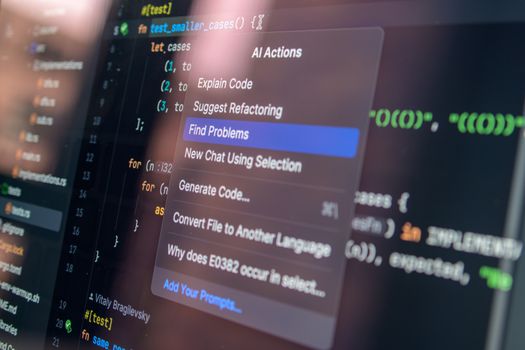
Artificial intelligence (AI) is transforming the world at a breathtaking pace, from virtual assistants in our pockets to advanced medical diagnostics and self-driving cars. One field where AI’s influence is accelerating rapidly—but often overlooked outside the tech industry—is software testing. As software becomes the foundation of everything from banking to entertainment, ensuring its quality is more important than ever. But traditional testing approaches are struggling to keep up with growing complexity, soaring release cycles, and the demand for flawless user experiences. Enter artificial intelligence: poised to revolutionize software testing from the ground up.
This article explores how AI is reshaping software testing, what this means for the future of quality assurance (QA), and what challenges and opportunities lie ahead.
The Rise of AI in Software Testing: A New Paradigm
Artificial intelligence is not merely automating repetitive tasks; it is introducing new ways to think about software quality. According to MarketsandMarkets, the global AI in software testing market is projected to grow from $415 million in 2022 to $1.5 billion by 2027—a compound annual growth rate (CAGR) of 29.4%. This surge is driven by the need for faster release cycles, greater test coverage, and the ability to handle the mind-boggling complexity of modern applications.
.png)
Traditional software testing relies heavily on manual effort and scripted automation. This approach is not only time-consuming but also limited in its ability to adapt to changing requirements or complex user behaviors. AI-powered testing tools use machine learning, natural language processing, and data analytics to go far beyond this, identifying patterns, predicting defects, and even generating new test cases automatically.
How AI-Driven Testing Differs from Traditional Approaches
To understand the transformative impact of AI on software testing, it helps to compare the traditional and AI-driven workflows. Here’s a direct comparison:
| Aspect | Traditional Software Testing | AI-Powered Software Testing |
|---|---|---|
| Test Case Creation | Manual or scripted; time-intensive | Automated from user stories, requirements, or usage data |
| Test Maintenance | High effort; scripts break with UI changes | Self-healing tests adapt to code/UI changes |
| Defect Prediction | Reactive; based on reported bugs | Proactive; predicts likely defect areas using historical data |
| Test Coverage | Limited by resources | Expanded using AI to identify high-risk areas |
| Test Execution Speed | Manual or sequential; slow | Parallel, optimized, and faster through AI orchestration |
| Human Involvement | High; repetitive tasks dominate | Focus shifts to creative problem-solving and analysis |
As shown, AI doesn’t just make testing faster—it changes what’s possible, enabling smarter, more adaptive, and more predictive testing processes.
AI Techniques Powering Next-Generation Software Testing
AI’s impact on software testing is powered by several core technologies, each tackling different challenges:
1. Machine Learning (ML): By training on historical test results, code changes, and user behavior, ML algorithms can prioritize tests, predict where defects are likely to occur, and optimize testing schedules. For example, Google’s AI-driven testing tools have reduced test suite execution time by up to 30% in large-scale projects. 2. Natural Language Processing (NLP): NLP allows testing tools to understand human language, making it possible to generate test cases directly from requirements documents or user stories. Tools like Testim and Functionize leverage NLP to bridge the gap between business requirements and technical testing. 3. Visual Recognition: AI can analyze screenshots and visual interfaces to detect UI anomalies that might be missed by traditional tests. Applitools Eyes, for instance, uses visual AI to detect even subtle layout or rendering issues with an accuracy rate above 95%. 4. Self-Healing Automation: AI-powered test frameworks can automatically update themselves when underlying software changes, reducing the maintenance burden. Studies show that self-healing tests can cut test maintenance time by 50% or more.These techniques are not just theoretical—they’re being implemented in leading organizations today, fundamentally altering how software quality is assured.
The Benefits and Opportunities of AI in Software Testing
Adopting AI in software testing brings a host of tangible benefits, reshaping the quality assurance landscape:
- $1: AI enables massive parallelization, faster test execution, and rapid feedback loops. According to Capgemini’s World Quality Report 2023, 63% of organizations using AI in testing reported faster release cycles. - $1: With AI’s ability to analyze vast amounts of data and user interactions, tests can target edge cases and high-risk scenarios that manual testers might overlook. - $1: AI minimizes the risk of oversight in repetitive or complex tasks, leading to more reliable outcomes. - $1: By automating labor-intensive tasks and reducing test maintenance, organizations can cut testing costs significantly. Deloitte reports that AI-driven automation can reduce testing costs by up to 40%. - $1: AI makes it feasible to run tests continuously throughout development, supporting DevOps and agile methodologies without overwhelming QA teams.These benefits are not just theoretical: leading tech companies like Microsoft, Facebook, and Netflix have adopted AI-powered testing to maintain software quality at scale, reduce downtime, and enhance user satisfaction.
Challenges and Limitations of AI-Driven Testing
While the benefits are compelling, integrating AI into software testing is not without obstacles:
- $1: AI systems require large volumes of high-quality data to train effectively. Incomplete or biased data can undermine results. - $1: Deploying AI-powered solutions often demands specialized skills in data science and machine learning, which can be scarce. - $1: AI decisions can be opaque (“black box”), making it difficult for testers and managers to understand why a test failed or a defect was predicted. - $1: AI models are not infallible. They can produce false alarms or miss defects, especially in novel scenarios not represented in their training data. - $1: For industries with strict compliance requirements, trusting AI-driven tests with sensitive data can be a challenge.Addressing these challenges requires balancing automation with human oversight, investing in skills development, and choosing the right AI tools for each context.
The Future Outlook: How AI Will Shape Software Testing Careers and Practices
As AI becomes embedded in software testing, the roles and skills required in QA are evolving. Rather than replacing human testers, AI is shifting the focus from repetitive execution to strategic oversight, creative problem-solving, and continuous improvement.
- $1: QA professionals will increasingly curate data, fine-tune AI models, and interpret results rather than writing manual test scripts. - $1: Roles such as "AI Test Engineer" or "Test Data Scientist" are emerging, blending domain expertise with data analytics and machine learning. - $1: The most effective future teams will combine human intuition, domain knowledge, and AI’s analytical power, leading to higher quality software and faster innovation cycles.A 2023 survey by the Test Automation University found that 72% of QA professionals believe AI will be integral to their roles within the next five years. Staying ahead means embracing new tools, learning new skills, and reimagining how software quality is delivered.
Final Thoughts on the Impact of Artificial Intelligence on Software Testing
Artificial intelligence is not just another incremental improvement in software testing—it is a fundamental shift that promises smarter, faster, and more adaptive testing processes. With the power to predict defects, adapt to change, and scale quality assurance to new heights, AI is poised to become an indispensable ally for developers, testers, and businesses alike.
However, realizing this potential means addressing challenges around data, skills, and trust, and ensuring that human expertise remains central to the testing process. The future of software testing is not AI versus humans—it’s AI and humans, working together to deliver the next generation of reliable, robust, and user-friendly software.